
If you’re planning time off, here’s a scandalous suggestion: stop checking your email. The whole time. No exceptions. I know what you’re thinking—”I can’t possibly do that!” or “What if something urgent comes up?” or “My team needs me!”

If you’re a leader and you work during your “time off,” you may inadvertently discourage your team members from taking the real vacation they need to truly recharge. While it’s not likely that you explicitly state that you’re hostile to vacation, if you stay connected to work while you’re out, you’re essentially communicating this through your actions.
While corporate vacation policy is broken in the US, taking a true vacation is actually the smart thing to do. Real rest requires complete disconnection, not just physical distance from the office, but mental distance from the inbox. Doing so is essential for burnout recovery or prevention.
Think about it this way: You can’t get a fresh perspective on something you never step away from.
Another way to think about it is that if you invest in paid time off, don’t you want the company to reap a return on that investment? The return is supposed to be the renewed creativity, increased motivation, and clear thinking that comes with time away. But if that time is spent still connected, there is no return on the investment.
In this article, I’ll show you exactly what steps to take to truly reap the rewards of a vacation from work. Then I’ll share a tip for how to make your re-entry after vacation so much easier.
The Science of Why You Can’t Just “Peek”

Even if you don’t open your email, just knowing you potentially might get a work email while you’re on vacation is enough to trigger a harmful reaction that researcher Bill Becker calls “anticipatory stress“—it’s the heightened state of alert. Whether you actually receive a message is beside the point. And here’s the part that’s even more painful: This research shows that the whole family has anticipatory stress. Can you think of a time that a work “bomb” blew up your family plans?
If you might get one, your brain stays partially engaged. While you’re skiing or curled up on the couch for a staycation, part of your mental bandwidth is still allocated to work mode. You won’t reap the full rewards of a true vacation.
As John Donahoe, CEO of eBay, explains: “Time off pays off … time spent away to refresh and refocus is really not time off. It’s just time better spent.”
Your unique insights and problem-solving abilities as a knowledge worker aren’t infinite. You need recharging. If you let email pull your mind back into work, you’re not actually taking a break. Read more about why checking email on vacation can actually damage your productivity when you get back to work.
Three Steps to True Disconnection

Step 1: Eliminate all access
Leave your laptop at home. If you see it, you’ll open it. On a staycation? Hide your laptop from view. More importantly, I strongly suggest that you disable email on your phone, because even the best intentions crumble when your inbox is one swipe away. Here’s how to do it:
iPhone/iPad Users:
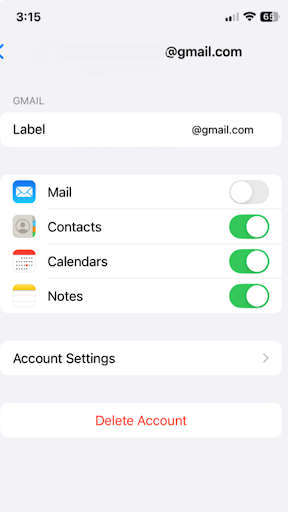
Go to Settings → Apps → Mail → Mail Accounts, then toggle off each inbox.
Android Users:
Disable auto-sync to stop new emails from arriving.
This preserves all settings and messages, but hides your inbox from view. When you return, just switch it back on—no setup required.
Step 2: Set Strategic Boundaries
Create an out-of-office message that does three things:
- Sets your return date to one day after you actually get back (giving yourself a buffer)
- Provides a backup contact for genuine emergencies, and
- Politely discourages non-urgent communication.
Try this:
“I’m on vacation until [insert buffer date]. [Name] at [email] can assist you in my absence. If this message is specifically for me, please resend after I return, as your original message will likely be lost in the backlog.”
Activate this message one day before you leave to create a buffer on both ends.
Step 3: Work Some Email Magic
Create a new folder in Outlook called, “Vacation Messages.”
Next, set a rule that every message arriving during your absence goes into that folder.
This way, the only messages in your inbox when you return are those that were there when you left. Voilà—no email backlog, no catch-up. Especially since you’ve already set expectations with your senders that you probably won’t read their initial message.
What About Real Emergencies?
Let’s address the fear: What if something truly critical happens at work while I’m on vacation?
First, recognize that “critical” is almost always an overestimate.
Second, you’ve (hopefully) designated a backup contact, so now you need to trust them.
Third, if your company can’t function without you for a week, that’s a system problem, not a vacation problem. The most successful leaders build teams and processes that don’t require their constant presence. Your vacation is actually a stress test of your organization’s resilience.
Three Real Benefits of Vacation

When you truly disconnect, three things happen that half-measures never deliver:
1. True Relaxation
When you disconnect you can enter genuine deep relaxation, as opposed to the pseudo-rest of lounging by the pool with one eye on your inbox. When you know you’re truly off the clock, your nervous system can actually downshift. Your shoulders drop, your breathing deepens, and that low-grade anxiety about what might be piling up dissolves. This is the kind of rest that actually restores you.
2. Sharper Focus
When you return after a real break, your focus is sharper and your thinking clearer. You aren’t dragging back the accumulated mental fatigue of having never really left. Instead, you return with fresh eyes, able to see solutions you might have missed and tackle challenges with renewed energy. Problems that seemed insurmountable before your time off may suddenly feel manageable.
3. Increased Productivity
This approach makes you more productive in the long run. It sounds counterintuitive. How could working less make you more effective? But burnout is real and insidious. When you give yourself permission to fully disconnect, you’re investing in your sustainable performance.
Can you afford not to unplug?

When you truly unplug, you prevent the slow decline that comes from never giving your brain a chance to reset. The hours you “lose” by not checking email on vacation are more than made up for by the weeks and months of sharper, more creative, more energized work that follow.
If you want to explore the research that shows why disconnecting is so key to productivity, read my article The Importance of Work-Life Balance in the Digital Age.
The emails will still be there when you return. The urgent matters will get handled by your capable colleagues. And that “emergency” that feels like it can’t wait? It almost always can. The question isn’t whether you can afford to unplug—it’s whether you can afford not to.
Need help accomplishing more with less stress?
Are you on the road to burnout and know you need more support to feel rejuvenated and energized at work? Get my 7-Day Restoration Handbook. Fill out the form below and you can get started right away.