
Years ago, during my education about the psychology of attention, I interviewed Dr. John Dovidio, an acclaimed social psychologist. At the time we spoke, he was also a professor and the head of the Intergroup Relations Lab at Yale University.
Dr. Dovidio has always been, and continues to be, my go-to source to understand the psychology behind my work. Our first interview was in 2010, which was:
- Four years after the launch of Twitter in 2006
- Three years after the debut of the iPhone in 2007
- The same year the iPad was released
- Four years before the public release of Slack in 2014
In other words, we were just beginning to feel the brunt of technological distractions at work. So much has changed, and yet, so much has stayed the same—we have so much new information, and yet each of these topics have only become more relevant.
Last week, in August of 2025, I spoke with Dr. Dovidio again for an updated take on these topics. In our most recent discussion, I asked Dr. Dovidio these questions:
- How is technology changing us?
- What are the effects of social media?
- What is the impact of technology on children?
- What is technology costing us?
- How can we train our brains for insight in a distracted world?
Listen to the full 2025 interview here.
How is technology changing us?

In 2010, I asked Dr. Dovidio whether juggling different types of incoming information can change how we think and behave. He said that the argument had merit. Then he added this:
“From an evolutionary standpoint, we’re built to be attentive to things that grab our focus. We’re very much attuned to things like motion, activity, color, and flashes, because those all had evolutionary importance to us. So it’s easy to become captivated by all the different things that we see on computers, on the web, and all the other devices that we have around us. But it doesn’t mean that that is our destiny.”
Back then, we also talked about how technology was beginning to erode our face-to-face interactions while at the same time expanding our social networks.
“Juggling Information”
My question about “juggling information” seems quaint. Now 15 years after this initial conversation, we know that “juggling” translates to “almost constant task switching.” Research by acclaimed distraction researcher Dr. Gloria Mark shows that “people spend an average of just 47 seconds on any one screen before shifting their attention elsewhere.”
So in my recent interview with Dr. Dovidio, I asked for his updated take on our ability to adapt to technology.
He shared that the effects of technology are more profound today than 15 years ago for a couple of reasons. First, people are using technology more than ever before, often at an earlier age. According to a 2020 study from the Pew Research Center, 49% of parents with a child age two or younger said their child interacts or uses a smartphone.
Additionally, technology itself has become much more sophisticated, altering how we interact with it and increasing our dependence upon it. As a result, technology changes the way we think.
Brain as a Muscle
Dr. Dovidio offered the advice to think of the brain as a muscle: “if you don’t use it, you lose it.” If only one part of the brain is consistently used—because of over-reliance on technology— then thinking becomes less comprehensive, and the ability to make connections between different ideas diminishes. He stressed that engagement and effort are critical for cognitive use and gain, likening it to remembering lecture material much better when taking your own notes rather than relying on someone else’s.
Listen to this portion of our interview to hear Dr. Dovidio’s expanded answer to my questions, including what he said about “cognitive misers” and our human need to feel like we understand things.
What are the effects of social media?

During my discussion with Dr. Dovidio in 2010, social media was still very new, and hadn’t yet had the profound impact on our lives and relationships that it has today. In our recent discussion, I asked Dr. Dovidio to share his thoughts on whether our now-huge social networks are really beneficial, or if he agrees with “Dunbar’s number.”
The well-researched theory referred to as “Dunbar’s number” says that “the number of people the average person could have in her social group was a hundred and fifty. Anything beyond that would be too complicated to handle at optimal processing levels.”
Dr. Dovidio agrees with the fundamental idea that there is a limit to our brain’s capacity for social connections. He explained that evolution is a slow process, and a significant portion of the brain is dedicated to social thinking, connections, and emotions; we have evolved to handle social life in progressively larger groups.
“Emotions are meant to be communicative and connect us, but our emotional capacity is limited,” he said. Social media, by evoking emotions and presenting an overwhelming number of connections, creates a burden. Like a muscle, the brain can perform effortlessly up to a point, but beyond that, integrating these connections becomes challenging and depleting.
He notes that while humans are social animals with automatic empathy for others, we can quickly deplete our reservoir of empathy due to our limited emotional and cognitive capacities.
Listen to our expanded conversation about my feelings on social media, and why I disconnected from it.
What is the impact of technology on children?
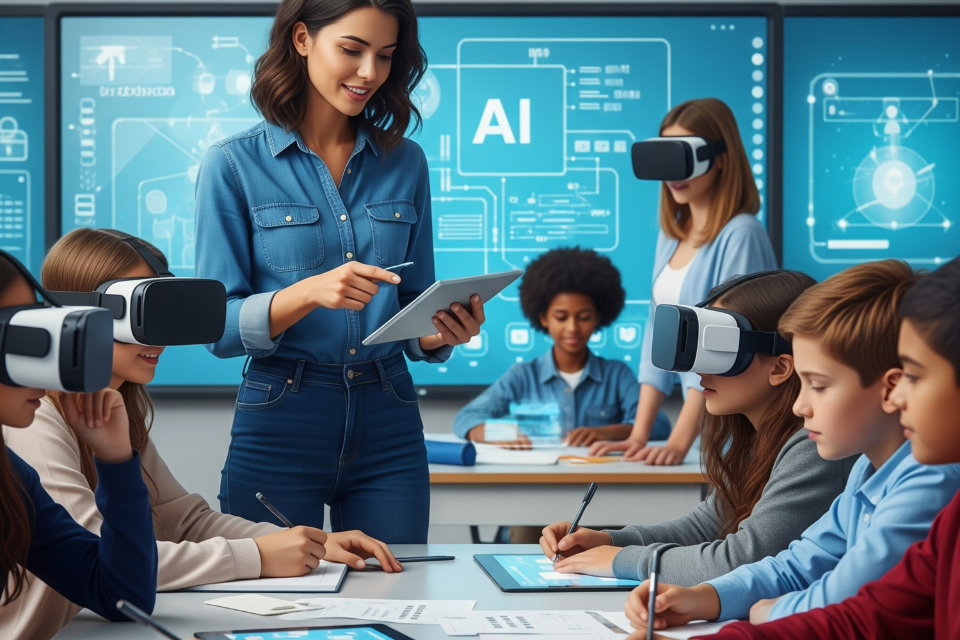
The single most common question I get about my work is how distraction and technology use is affecting children, and what parents can do to help them.
Back in 2010, I asked Dr. Dovidio about children’s ability to successfully adapt to their increasing use of technology at progressively earlier ages. He predicted greater adaptation with each generation. He also noted that human adaptation is much slower than the pace of technological advancement, and is also more limited. He said:
“There are probably key times in development when kids are going to be overly stimulated in a way that could create habits of inattention later on in their lives. But they are fully capable, I hope, of actually being able to reverse some of those things as their situation changes.”
When I recently revisited this question about the impact of technology on children, I found Dr. Dovidio’s answer particularly relevant and thought-provoking. He explained that growing up is “fundamentally about developing skills and acquiring experiences. If technology restricts children’s experiences, their physical activities, and their ability to interact with complex and unpredictable human beings, it will lead to more isolation.”
As a result, Dr. Dovidio said, the isolation may lead to less empathic and cooperative individuals. He also pointed out that because technology can be controlled, while human interactions often cannot, children who spend more time on devices may be less equipped to adapt to real life human interactions.
Listen to his comments in full here.
What is technology costing us?
In 2010, I asked Dr. Dovidio about how many new platforms people were willing to embrace, and how much was too much. He commented on the history of technological innovations, how they changed society, and the inevitable doomsayers, like those who predicted that the introduction of television would be our downfall.
Of course, with the introduction of new communication channels and artificial intelligence platforms every day, the question about how much tech is too much is only more relevant. Clearly, technology is changing our society, our economy, and our behaviors at an astonishing rate. Given Dr. Dovidio’s particular expertise in social groups, I asked for his advice about how people can stay relevant without getting overwhelmed.
He offered warnings on how social media actually magnifies polarization and social division, and how we can avoid that. With regard to AI, he stressed the importance of “active engagement, which includes motor skills, social skills, and pushing oneself to uncomfortable things, as this is where growth occurs. The default tendency is to choose the easy way, so we must actively push our cognitive, social, and intellectual ‘envelopes.’”
Hear Dr. Dovidio’s full suggestions, in context, here.
How can we train our brains for insight in a distracted world?
At the time of our initial interview, I was at the early stages of what became my crusade to shift the paradigm of “time management” to “attention management.” I reflected on the loss of what I call “in-between moments”—like waiting in line or sitting at a red light—that once gave our brains time to wander. I thought about how that loss might affect adults and children alike.
During that interview in 2010, when I shared my concerns with Dr. Dovidio, he agreed that moments of inward focus are not only crucial for learning and memory, but also for original thought.
In our recent discussion, I once again asked Dr. Dovidio about the importance of “mind wandering.” I have been thinking about his answer ever since! He talked about how self-reflection is a critical component to understanding who we are and what we believe, and how we relate to other people. He also discussed the dangers of losing our opportunities for this self-reflection and consolidation of thought.
Don’t miss listening to his full response.
Managing Attention to Minimize Technology’s Impact
In navigating the rapidly evolving digital age, it’s clear that technology fundamentally changes how we think and adapt, and presents challenges to our inherent cognitive and emotional limits.
My conversations with Dr. Dovidio have made me more determined than ever to continue my work on attention management. It’s a critical skill to help us live intentionally, maintain control over our cognitive abilities, and successfully adapt to a world where technology is infiltrating virtually every part of our lives—including how we think, how we feel, and whether we allow our minds to narrow and weaken, or we expand our human capacity to think critically and build human connections.