
Have you ever found yourself in a productivity slump, only to be jolted back into high gear by your favorite playlist? You’re not alone. Music has long been touted as a powerful tool to enhance productivity, but is this true in all cases? Can you listen to any type of music while you do any type of task and boost your ability to accomplish more?
In this article, I’ll show you exactly how—and how not— to use the power of music to manage your attention, unleash your genius, and accomplish more.
The Rhythm of Productivity
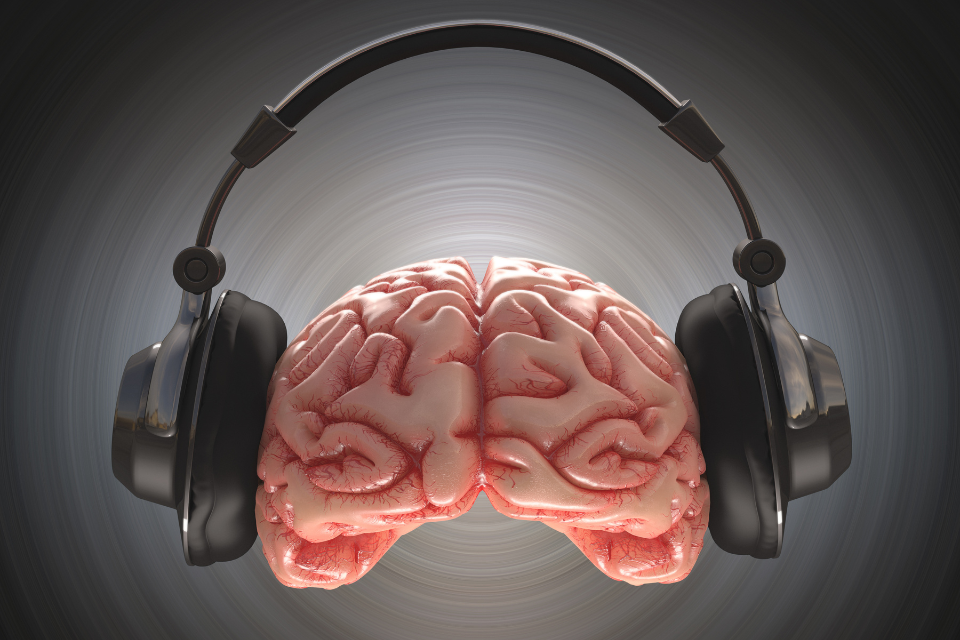
Music touches our brains in unique ways, and numerous studies have shown that it can significantly impact our brains. In fact, listening to music is associated with a range of benefits, including:
- Reduced stress levels.
- Increased happiness.
- Better recall.
- Improved verbal processing.
- Improved visual-spatial processing.
- Faster task completion.
- Divergent (out-of-the-box) thinking.
Your Favorite Playlist Might Be the Worst

When it comes to boosting your productivity, putting in headphones can be a good idea to block out external noise, especially if you work in an open-plan office. The headphones will signal to others that you don’t want to be disturbed.
But what should you play in those headphones?
If your favorite playlist contains music with lyrics, or if you’re listening to new music that you’ve never heard before, your brain has to multitask in order to both process the music you’re hearing and do the work you’re trying to complete. If you’re doing a repetitive task that requires little focus, then your playlist with lyrics might work to keep you awake.
However, most knowledge work requires more attention to the tasks, and there are certain kinds of music you can play that won’t require extra brainpower to process and will block out external noise. In fact, the right types of music can make you more relaxed and able to access your deepest wells of creativity and insight.
While instrumental music without lyrics is typically best for knowledge work, the exact genre of background music you should choose depends on what you’re trying to achieve.
Let’s take a look at my Four Quadrants of Attention Management model in the context of music, so that you can use the right combination to unleash your genius and accomplish more of what’s most important to you.
Use The Power of Music To Manage Your Attention

Attention management is the practice of intentionally engaging the most optimal brain state to achieve the best results in the moment. Learning attention management gives you the ability to:
- Recognize which quadrant will best serve you in which situation.
- Understand which quadrant you’re in at any given moment.
- Make intentional shifts throughout the day into the most appropriate quadrant as the situation requires.
The four quadrants of attention management are based on the amount of control we exert over our attention. Each quadrant explains the state of your attention produced by that effort. I discuss the four quadrants of attention management in more detail in my book, Attention Management: How to Create Success and Gain Productivity—Every Day.
We can use the power of music to help us relax, get energized, or put us in a state of deep contemplation. Once we are in a particular mind-state, it can be easier to summon the type of attention that is most conducive to a particular goal, whether we simply want to feel refreshed, or we need to come up with a new product plan under a tight deadline.
Let’s take a look at what the four states of attention are, how music can help us accomplish more in each state, and what type of music is best suited to our goals in each quadrant.
Note: How one genre of music affects most people doesn’t mean it will impact you the same way. Therefore, when I suggest “What type of music is best,” I am only offering suggestions. You’ll need to see what types of music work best for you. In general, you’ll want to pick background music without lyrics.
1. Reactive and Distracted – Rhythmic Drums or Tibetan Bowls

What our attention is like in this state: In a reactive and distracted state, we are reacting to external and internal stimuli, such as an interruption from a colleague, pings from our smartphones, or even our own thoughts. We might be in the middle of a task when suddenly we remember we forgot to pick up dinner. Uh oh! We feel antsy—distracted, scattered, and impatient. At the end of the day, we are likely to feel we were busy all day but got nothing done.
How music can help: This is rarely the state anyone wants to be in, especially when we’re trying to accomplish important work. In this state, we may be feeling that everything is urgent and out of control. Our bodies react by releasing adrenaline and cortisol. Music can move our brains from fight-or-flight mode into a more helpful relaxation mode. In this state of mind, we are much better able to proactively manage our attention and accomplish our most significant results.
What type of music is best: In the middle of feeling frazzled, put on a rhythmic drum beat or some Tibetan bowls. Listening to sounds like these is likely to switch you out of this disorienting state of attention into one that’s more productive and soothing. Studies show that music can reduce road rage, especially if the beat is introduced suddenly rather than gradually. So don’t wait.
2. Daydreaming – No Music or Relaxing Piano

What our attention is like in this state: It used to be that we would have “downtime” in between meetings or conversations with colleagues or while riding down the elevator or walking to our cars. Now, though, at the first unscheduled moment, many of us instinctively reach for our smartphones to check social media and voicemails and other messages. In doing so, we deny our minds the opportunity to wander aimlessly, which is unfortunate and counter to being our best selves. Daydreaming is an essential and restorative state; after all, it is when we daydream that we reflect, process, and consolidate information. Also the daydreaming state is often when insights occur.
How music can help: Instead of using downtime to check your messages or social media, try putting on some music and just letting your mind wander aimlessly. Think about one time of day that you typically grab your phone to fill some “empty” time. Instead, commit to listening to relaxing music at that time for one week. In just a short time, you are likely to feel less frazzled and burned out, and more refreshed and energized.
What type of music is best: When you want to daydream, skip the music entirely if you are in a quiet place or out in nature. However, if you need to block out external stimuli (like in a noisy office), put on some headphones and try soothing piano music or recorded nature sounds.
3. Focused and Mindful – Uptempo Classical

What our attention is like in this state: When we are in this state, we can focus deeply on a single task or activity for an extended time. However, harnessing our attention to enter this state often requires true effort. Examples of when we might want to be focused and mindful include when we’re trying to digest unfamiliar but important information, learning a new skill, or trying to complete a cognitively demanding task. Practicing attention management can help us enter this state more easily and quickly.
How music can help: Listening to music you find relaxing just prior to an important meeting or presentation can slow your heart rate and put you in a more open state of mind in which you can be fully present. The right kind of music can also help you stay focused on that important—but difficult—task you’re trying to complete or skill you’re trying to learn.
What type of music is best: Putting on uptempo classical music in a major key can improve your processing speed and recall. Try Vivaldi’s Four Seasons to boost your creativity right away.
4. Flow – Instrumental Jazz

What our attention is like in this state:
The last of the four quadrants of attention management is the Flow Quadrant, and you may already be familiar with it. Flow has become one of the most fascinating and influential ideas in business, thanks to the work of Mihaly Csikszentmihalyi, a Hungarian–American psychologist. Csikszentmihalyi and others describe flow as a state of heightened focus and immersion. In Flow: The Psychology of Optimal Experience, he writes:
“In this state, you become so engrossed in your work or other activity that time seems to fly by. In the end, you feel a sense of satisfaction—like you have really accomplished something. The flow state illustrates that demanding tasks don’t have to be “hard” or unpleasant.”
You can’t just decide to enter the Flow Quadrant at will. But if the conditions are right, and if you intentionally focus for long enough, you might tip over into flow. It happens when a specific part of the brain disengages and your sense of self falls away.
How music can help: When we listen to music we like, we often lose track of time. The right music can almost entrance us into a flow state in which we are fully absorbed.
What type of music is best: To enter and stay in flow, you might want to try listening to music that matches your mood and has no words. Are you feeling excited about the projections you are making? Try upbeat orchestral music in a major key to release endorphins and energize you. Feeling deeply moved about the book chapter you are writing? Some jazz instrumentals might just help you enter flow.
Practical Tips

Now that we understand how music can impact productivity, here are some practical tips to help you harness its power:
- Create Task-Specific Playlists: Curate different playlists for different types of work. For example, have an upbeat playlist for mundane tasks and a classical or instrumental playlist for deep work.
- Experiment with Genres: Don’t limit yourself to one type of music. Experiment with various genres to see which ones work best for different tasks.
- Adjust the Volume: Keep the volume at a moderate level. Music that is too loud can be distracting, while music that is too soft may not have the desired effect.
- Take Breaks: Use music as a signal for breaks. For instance, work for the duration of a playlist and then take a short break before starting the next one.
The Power of Music To Boost Productivity
Music holds the remarkable ability to influence our minds and bodies, making it a powerful tool for enhancing productivity. But many of my clients often select music that isn’t as helpful as it could be, and is even detrimental to their goals in the moment. By understanding the science behind music and productivity, you can tailor your listening habits to maximize your efficiency and well-being.