

By Shawn Thomas, Certified Empowered Productivity Coach
You’ve decided to make a change. Maybe you’re going to stop checking email, social media, or the news every few minutes. Maybe you’re going to exercise regularly, become a better listener, get organized, or finally delegate more.
You start with enthusiasm. And for a few days, or even a few weeks, you do well. Then life gets busy and you start to forget. You slip back into old routines. Before long, you might find yourself wondering where things went wrong, or if you really wanted to make the change after all.
And when things break down, it’s tempting to think that you lacked discipline, willpower, or dedication. But that’s rarely the problem.
Change is difficult because of what you run into along the way. Not because you lack dedication, are too lazy, or somehow differ from the people who seem to succeed more easily than you do.
There’s a path every person walks when they try to change a behavior, and that path has some predictable landmarks on it. Once you know what they are, they stop feeling like evidence that you’re failing and start looking like exactly what they are: the rough terrain of change.
Let’s walk the path together.
New behaviors require conscious attention
Every new behavior begins on purpose. That’s the whole problem in a nutshell. It requires repeated, long term intention.
Think about what it takes to do the new thing instead of the old thing. You have to remember that you’re trying to change. You have to notice the moment where the old behavior would normally kick in. You have to choose, in that moment, to do something different. And you have to interrupt yourself, mid stream, to make that choice happen.
None of that was required before. Reaching for your phone when you feel a lull, opening your inbox the second you sit down at your desk, jumping in with a thought or advice while someone else is still talking, immediately taking action on an idea right when it pops into your head during a planning effort. These behaviors run on autopilot. You don’t have to think about them because, once their trigger occurs, they happen automatically, without you even realizing it in the moment.
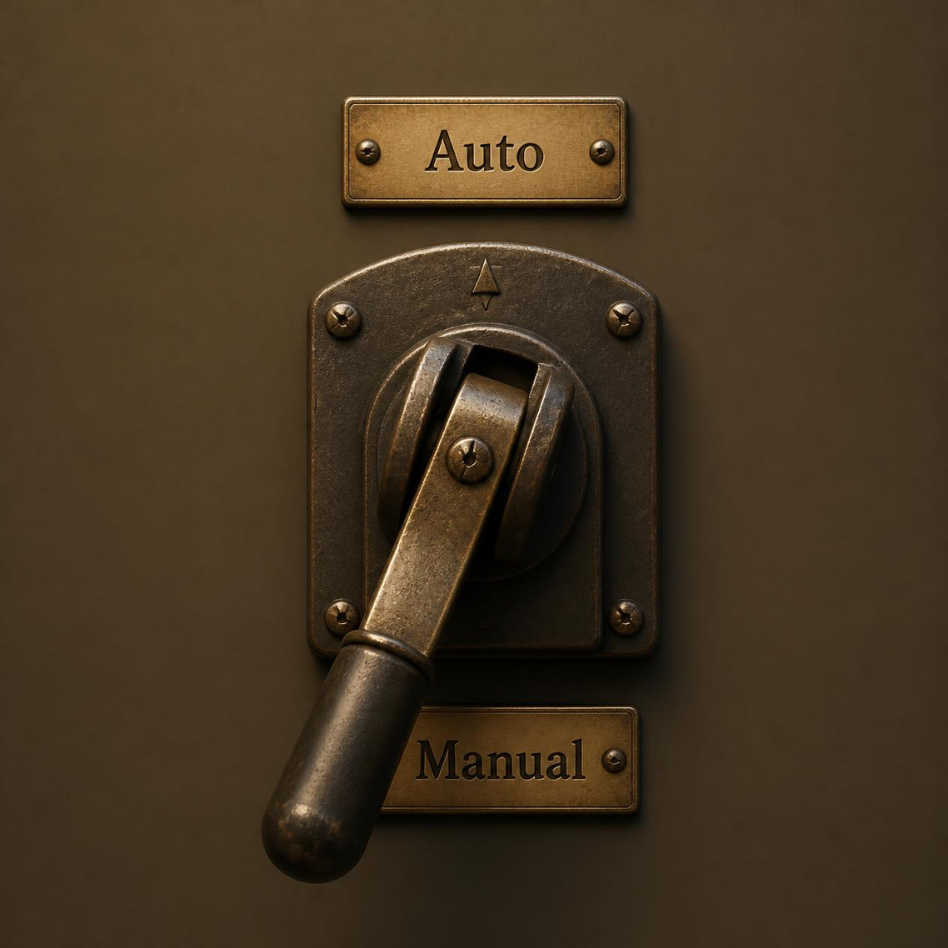
When you decide to change, you’re committing to an effort to disrupt the automation. You’re asking your brain to apply effort to something that is currently effortless. And your brain is thrifty. It’s always looking to save effort, always looking for the shortcut.
This is why new habits feel exhausting, even when the behavior itself is simple. Drinking more water isn’t hard. Remembering to drink more water at regular intervals, especially in the middle of a busy day, is the hard part. The behavior takes two seconds. The dedicated attention it demands is what wears you down.
So if you’ve noticed that trying to change one small thing seems to take up more mental space than it should, you’re not imagining it. You’ve added a new job to your brain’s to do list, and that job is to be persistently intentional.
Old behaviors don’t disappear
Here’s something worth meditating on for a second: you don’t just replace an old behavior with a new one. You’d think that’s what’s happening, but it’s not quite accurate. The old behavior doesn’t go away. What happens instead is that your new, desired behavior has to continually compete with the old one.
Every opportunity to act contains two possible responses. There’s the response you’ve built over years of repetition, and there’s the response you decided three days ago you’d rather have instead. Put those two side by side and ask yourself honestly which one is going to win most of the time.
The established habit is familiar, practiced, comfortable. It has thousands of repetitions behind it, each one carving the pathway in your brain a little deeper. Your brain built that pathway because doing so creates efficiency, not because it was a great idea. Habits save precious energy. Well worn paths require less effort to travel than new ones.
The new behavior you’re trying to build has three days of practice. Maybe three weeks if you’ve been at it for a while. It’s a rough hiking path next to a highway. Don’t be surprised when your feet keep finding the highway instead. That’s how your brain is built. It rewards past repetition.

Give it time and enough persistence, and the new behavior will begin to win. The hiking path will become more and more like a highway, and the highway will begin to degrade, leveling the playing field. But in the early days, the old behavior is likely to win most of the contests. It has a massive head start. And, even when the hiking path becomes a highway, the old behavior may still win from time to time or in the right situation.
Once you understand that you’re not erasing anything, that you’re building a second option and asking it to compete with a stronger, older one, the setbacks along the way start looking like exactly what you’d expect from a less practiced competitor going up against a seasoned one.
Your Environment Works Against You
Your habits didn’t develop in a vacuum. They developed in response to specific supports in your environment, and those things are likely still there, doing exactly what they’ve always done.
Notifications trigger old habits. Seeing specific people triggers old habits. An open inbox triggers old habits. Walking into your kitchen at 9pm triggers old habits. Your environment has spent years shaping and supporting the behaviors you’re now trying to change, and it hasn’t gotten the memo that you’d like it to stop.
This is the piece people miss most often, especially those who tend to adapt to their environment rather than shaping it to support them. You’re trying to create tomorrow’s behavior inside yesterday’s environment, and then wondering why you keep falling backward. Your phone is still sitting face up on the desk. Your calendar still lets you book meetings back to back with no breathing room. Your kitchen still keeps the same snacks in the same cabinet at the same eye level. That’s an environment problem, not a discipline problem.
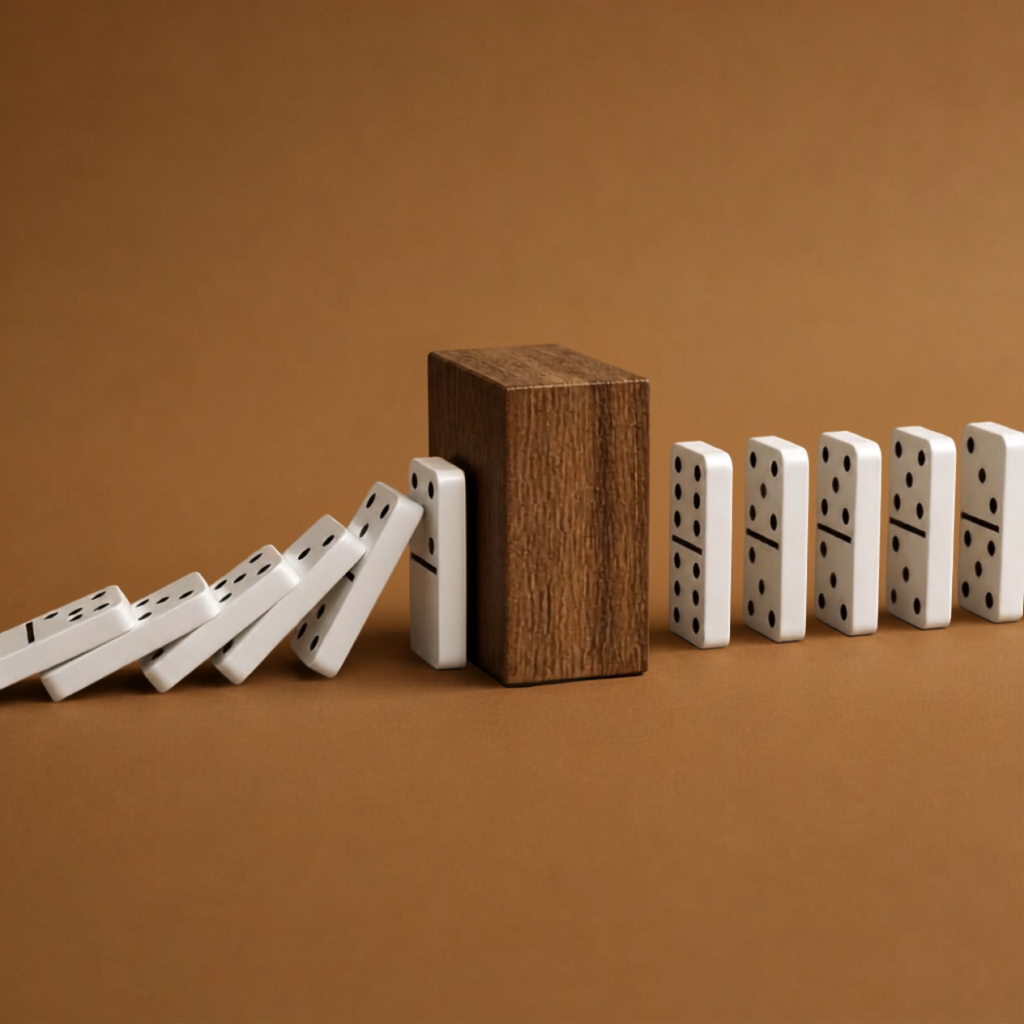
An environment doesn’t know your intentions. If you want a new behavior to have a fair shot, you have to change your environment to support it while stifling your old habits. That might mean putting your phone in a drawer during focus time, adding “buffer blocks” between meetings to your calendar, or moving the snacks to a more difficult to reach place in the cabinet. These are small adjustments, but they matter. You’re managing your own habits and pushing against a whole environment that was built to reinforce the old ones.
Progress Is Often Invisible
Much of what happens during behavior change efforts is invisible. You don’t see the trigger that pulls you back into the old habit. You don’t see the automatic response that fires instantly. You don’t see the small improvement between attempt four and attempt nine. You don’t see the benefits accumulating beneath the surface, the ones that haven’t appeared in any measurable way yet.
What we do see tends to be much narrower. You notice whether you succeeded today or not. Did you check your email compulsively or did you hold off until the pre-defined points in time? Did you exercise or did you skip the trip to the gym? That’s the only data point most people track, and it’s a rough one, because it collapses everything that happened, every small win, every moment of resistance, every shift in how automatic the behavior felt, into a single pass or fail grade.
Pass/fail is a terrible measurement system, and yet it’s the one almost everyone uses by default. It means you can be making real progress and still feel like you’re failing, simply because the progress you’re making doesn’t show up on the only scoreboard you’re watching.
If you want a more accurate read on how you’re doing, you have to go looking for the things that don’t always feel like they matter. Notice when the pull toward the old behavior felt a little weaker than it did last week. Notice when you caught yourself mid-habit instead of realizing only after the fact. Notice when the new behavior required a little less internal negotiation than it used to. None of that will become clear if the only question you’re asking is whether you succeeded today. It only appears when you’re willing to look for and appreciate it.

Results Are Uncertain
Old behaviors come with rewards, or results, that you can count on. You know exactly how checking your phone will feel. You know what happens next when you open your inbox instead of starting the harder task. You know you can perform the old behavior successfully, because you’ve done it ten thousand times already. There’s comfort in that certainty, even when the behavior itself isn’t serving you well.
New behaviors don’t offer that same guarantee. Will this work? Will it produce the result I’m hoping for, and how long is it going to take before I know? That uncertainty is uncomfortable, and it’s also unavoidable. Every new behavior comes with a stretch of time where you can’t yet prove to yourself that it’s working.
That uncertainty is why patience matters, and it’s a specific kind of patience: continuing to act in a new way despite not yet having proof it’s paying off, when gratification is nowhere in sight.
Every worthwhile change effort creates a gap between effort and evidence. You put in the work today, and the proof that it mattered doesn’t arise until later, sometimes much later. That gap is where most people give up.
Recognize That Your Effort Isn’t Failing
You’re encountering the rough terrain of change. And none of it means something is wrong with you or your ability to change.
You’re asking your brain to do something unfamiliar, so of course it feels unnatural. New things are supposed to feel that way.
Your new, chosen behaviors have to compete with others you’ve practiced for years, and a three day old behavior isn’t going to out-muscle a years-old habit right away. The goal is to find ways to sabotage the old habit while supporting the new behavior, again and again, until the newer path gets a little more established and the older one becomes a little less automatic.

Steps to Support Change
Make it easier to keep the new behavior top of mind by attaching it to something that already happens reliably, so you’re not relying on memory alone in the exact moment the old habit would fire. Your coffee brewing, arriving at your desk in the morning, or any other good habit you already have can all serve as an anchor, reducing the load on your brain.
Give new behaviors every advantage you can while making the old behavior slightly harder to do, so more of the head-to-head moments tip in its favor over time. If you want to read more instead of spending time on social media or watching TV, keep your reading device handy while removing social media apps from your phone and logging out of your streaming apps, so getting back to either takes an extra step instead of one tap.
Instead of trying to succeed inside an environment that was built to support your old routines, take charge of it. Stop struggling with systems designed to work against you and start changing them. Change your environment by modifying the things that triggered old habits and create new triggers for new behaviors.
Expand your measure of success. Remember that you’re making progress that may still be invisible to you. Look wider and maybe a little deeper, and you’ll likely find more evidence than you thought was there.
Appreciate the effort you’ve invested, even before the new results have had time to appear, and see the lack of consistent results for what it is: a sign you’re in the middle of the process, not that you’re failing.
You’ve committed to growth and improvement, and that’s a genuinely hard thing. You’re not lacking willpower or doomed to fail.
Strategize your effort, then give yourself the time this takes. Give yourself some grace along the way.
You’re not behind. You’re not failing. You’re just in the middle of the process.