Part 3 in a series on the 2025 Microsoft Work Trend Index Report
The notion of a clear dividing line between the workweek and the weekend is quickly becoming a relic of a past era, much like the private office or the water cooler chat. For generations, the 5-day work week provided a fundamental structure to life. But today, for many of us, the boundaries have collapsed entirely.

As the Microsoft 2025 Work Trend Index Report suggests, “intelligence on tap” in the form of AI agents will eventually dismantle the crisis of perpetual human availability that currently defines our working lives.
The report points out a reality many professionals feel daily: The modern workday for many has no clear start or finish. Today, burnout is rampant. My decades in the productivity industry have shown that this constant connectivity has yielded a deeply unproductive state, which I call a “culture of urgency.”
The Series
This article is the third in a series that stems from the Microsoft report. Other articles in this series include:
Article 1: Frontier Firms: Microsoft’s Jaw-Dropping Report
Article 2: How to Improve Work Culture by Fixing the Infinite Workday
Article 4: AI and the Future of Work: How To Prepare
Article 5: Revolutionize Internal Communications with Microsoft Copilot Notebooks
In this article, I’ll explore why asking humans to work more isn’t the answer, and why research proves that businesses that require human teams to do less actually accomplish more. I’ll also share some practical tips for how to implement a “work less, accomplish more” strategy in your workplace.
The Hidden Cost of “Always On” Culture

Today’s workplace operates on a dangerous assumption: that immediate response to communication equals high performance. When customer queries and workplace demands are incoming at all hours, the assumption is that everyone needs to be connected around the clock.
This culture of perpetual urgency forces knowledge workers to never truly unplug from the office. It also causes constant task switching, undermining the deep focus required for breakthrough thinking.
Yet many organizations continue to reward visible busyness and quick reaction time over the delivery of thoughtful, meaningful results. This creates what I call the “distraction tax” on productivity—the hidden cost of chronic distraction and cognitive depletion that comes from operating within a culture of urgency.
The financial impact is staggering. When your highest-paid talent spends their days jumping from one seemingly urgent but unimportant communication to another, they’re wasting valuable time and focus. Instead of leveraging creative thinking and solving complex problems, you’re losing both salary dollars and the competitive advantage that comes from sustained cognitive effort.
The Minefield of the 4-Day Workweek “Solution”

The four-day workweek has gained traction as companies seek solutions to employee burnout. A comprehensive study published in the journal Nature Human Behaviour tracked nearly 3,000 employees across 141 companies in six countries (including the U.S.), finding significant improvements in job satisfaction, sleep quality, and stress levels, with productivity remaining stable or increasing.
Study participants moved from working 40 hours per week to 32, without a reduction in pay. They experienced significantly higher job satisfaction, lower stress, improved sleep, and fewer burnout symptoms. Importantly, leaders saw improvements in retention and recruitment, savings on sick time, and revenue gains.
The study, led by researchers at Boston College, found that most companies (about 90%) chose to keep the four-day schedule afterward, showing that reduced hours can benefit both employees and organizations.
And, in fact, an important caveat of the study is that prior to participation, the study organizations received critical support on how to streamline processes and help employees work smarter.
But here’s the critical insight most leaders miss: reducing the official number of hours worked per week still won’t solve the underlying problems.
The Real Solution

Whether your team works four days or five becomes irrelevant when they’re fielding messages at 9 PM or you’re attending a Zoom meeting on your off-day because that’s what works for the global team. The Microsoft report shows that the knowledge workers surveyed receive an average of 58 messages per day outside of core work hours, and 30% of meetings span multiple timezones.
The real solution, then, will require addressing the root causes. These include the expectation of immediate responsiveness that keeps employees tethered to devices 24/7, as well as a culture that encourages constant distractions which deny employees the ability to do deep work.
Where Performance Peaks

Research for my most recent book led me to a variety of studies on optimal work time per week for both productivity and wellbeing. I discovered the range is an average of 32 to 45 hours.
Beyond this threshold, additional work hours no longer translate into more output, but instead result in diminishing returns often characterized by busy work and burnout.
Researcher Laura Vanderkam found that employees working about 38 hours a week report the highest job satisfaction and engagement. Similarly, Stanford economist John Pencavel discovered that productivity drops sharply after 50 hours—and beyond 55, extra work is mostly wasted.
The World Health Organization adds a sobering fact: working more than 55 hours a week raises stroke risk by 35% and heart-disease death risk by 17%.
So how can leaders square this circle—meet escalating demand while requiring less time on the job from their teams?
3 Strategies to Combat Too Much Work

Forward-thinking leaders are no longer measuring success by hours logged. They’re tracking outcomes achieved and problems solved. They’re also helping teams establish communication boundaries and teaching attention management skills. Following are some ideas that would be important first steps, whether you’re entertaining the idea of a four-day work week or not.
1. Measure output, not activity.
Shift performance metrics from time-based to outcome-based:
- Replace “hours worked” with “projects completed”
- Focus on creativity and problem-solving impact rather than meeting attendance
- Reward deep work achievements over limitless availability
2. Establish communication boundaries.
Create explicit policies defining when and how teams communicate. This includes:
- Designated “communication hours” when immediate responses are expected
- Clear guidelines for what constitutes a true emergency
- Automatic delays on after-hours messages using scheduling features
3. Teach workflow skills based in attention management.
The solution isn’t better time management—it’s attention management. This means having a repeatable, proven system for personal workflow, rooted in skills for managing distraction, such as:
- Empowering teams to regain control over their environment, their technology, and their own behaviors, so they can maximize focus
- Optimizing task, priority, and communication management to be less busy, but more productive
- Building systems that support independent work and sustained concentration over constant connectivity and ineffective “collaboration”
Preparing for the AI-Driven Future

The Microsoft report suggests that AI integration will eventually resolve our current crisis of perpetual availability. But organizations will always benefit when employees work smarter. Companies that equip their teams with more modern workflow skills like attention management will have a significant advantage as we make the transition to fully realizing the promise of Frontier Firms.
Companies that learn to unleash human genius through focused effort—rather than diluting it through constant interruption—will be best positioned to collaborate effectively with AI systems that augment, rather than replace, human creativity.
The Bottom Line

The path to improved workplace culture doesn’t run through longer hours or faster responses. It runs through the deliberate cultivation of focused, meaningful work that energizes rather than exhausts your team.
Leaders who embrace this counterintuitive approach won’t just retain top talent—they’ll unlock the innovation potential that comes from giving brilliant minds the space to do their best thinking. They’ll recognize that too much work is a bad thing for productivity, so they’ll implement the culture changes that just might make “time off” mean something again.
Ready to Work Less and Accomplish More?
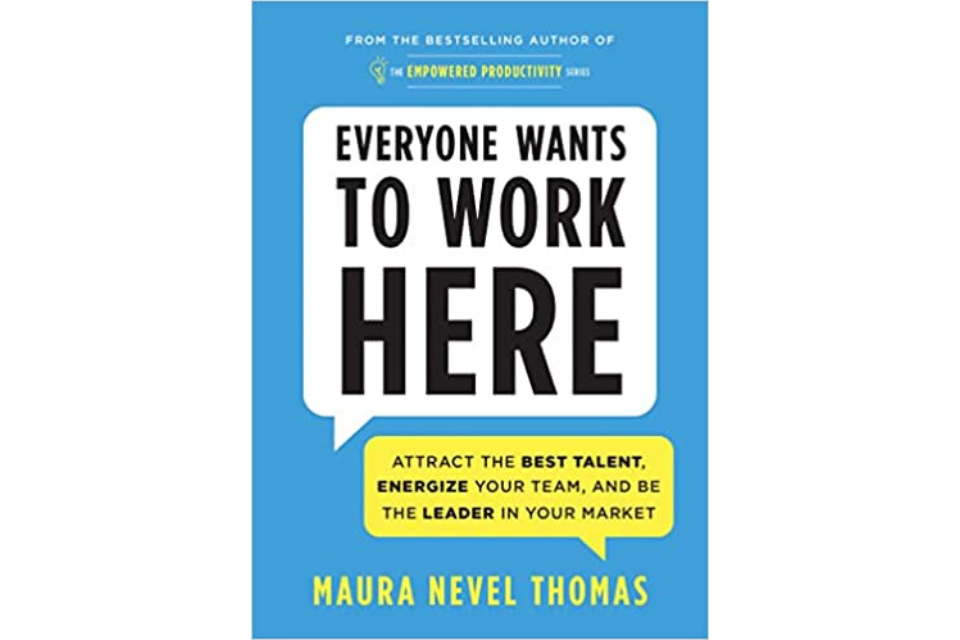
Do you need help transforming your company into a place where everyone wants to work? Do you want to help your people feel energized at the end of each work day rather than depleted and burned out?
Leaders who want to solve these problems should start by understanding how corporate culture affects productivity. I’ve trained thousands of leaders to apply these ideas using my Empowered Productivity System.
An Empowered Productivity Action Lab is a great low-budget investment for smaller organizations or nonprofits. For larger companies, it’s a way to generate excitement and buy-in across the organization for more extensive and transformative professional development engagements.